.png)
Why AI Vendor Risk Is Different
Traditional vendor risk programs were built around fairly stable SaaS categories: CRM, analytics, HR systems, storage, support tools, and finance platforms. The review process asked whether the vendor encrypted data, passed security audits, supported SSO, had a business continuity plan, and signed the right contractual terms. Those questions still matter, but they do not fully describe the risk of an AI tool. An LLM vendor does not merely store data; it can transform it, summarize it, infer sensitive meaning from it, generate new content from it, and route it through model providers, plugins, fine-tuning pipelines, evaluation systems, or support workflows that employees never see.
The risk is also no longer limited to tools formally bought by procurement. Employees encounter AI inside writing apps, meeting recorders, browser extensions, spreadsheet assistants, code editors, research tools, design platforms, and customer support systems. A product that looked like a low-risk productivity app last year may now process entire documents through a third-party model. A small AI feature can introduce data processing, cross-border transfer, retention, intellectual property, and auditability questions. This is why AI vendor approval needs its own operating model, not just a new checkbox inside the old security questionnaire.
Start with an AI Tool Inventory
The first control is visibility. Teams cannot approve, restrict, or negotiate terms for AI tools they cannot list. A useful inventory should include more than the vendor name. It should identify the product owner, business purpose, departments using the tool, types of data processed, model providers involved, whether prompts and outputs are retained, whether customer data or employee data may enter the system, and whether the tool has autonomous capabilities such as sending messages, updating records, or calling APIs.
The inventory should also distinguish between direct AI vendors and indirect AI features. Direct vendors are obvious: a model API provider, a corporate chatbot, a coding assistant, or an image generation platform. Indirect features require more discipline. A contract management system may add AI clause review. A call center platform may add AI summaries. A BI tool may add natural-language analytics. A browser plugin may read page content and send it to an external model. Each of these belongs in the AI inventory because the risk follows the data flow, not the marketing category. Once the inventory exists, procurement, legal, security, and business teams can evaluate new requests against known patterns instead of debating each tool from scratch.
Create a Practical Risk Tiering Model
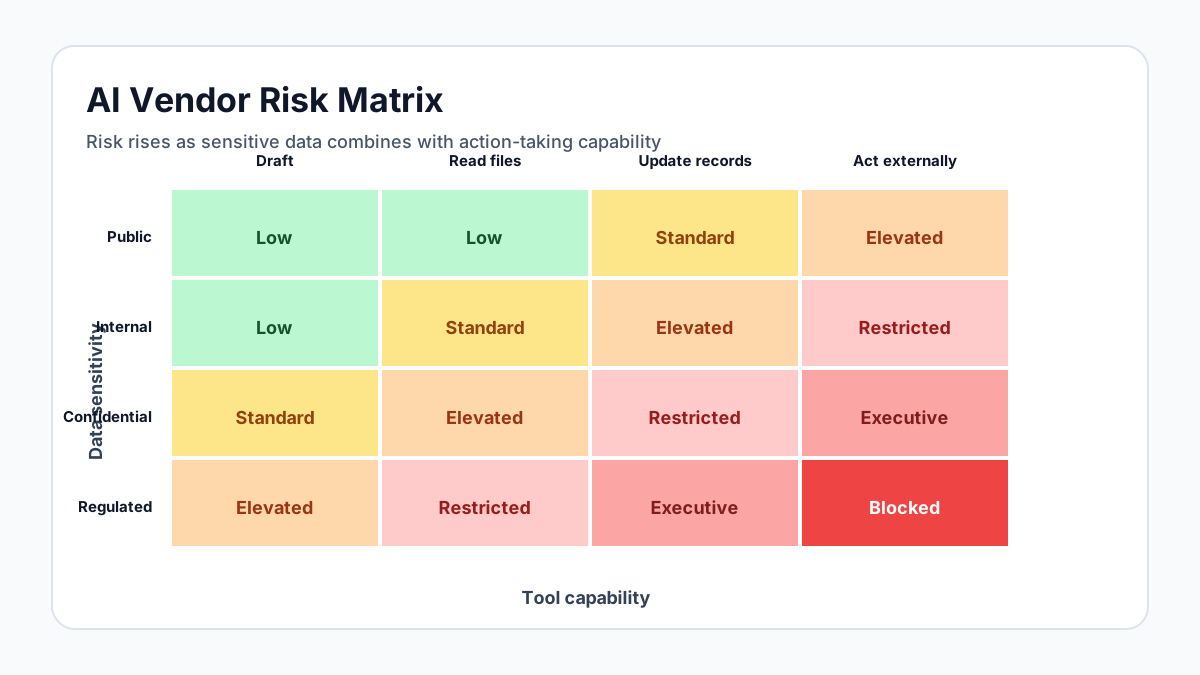
Not every AI tool deserves the same review depth. A team experimenting with a public model using sanitized marketing copy should not face the same approval process as a customer support assistant reading live tickets or a finance workflow reviewing unreleased revenue data. The goal is to build a risk tiering model that is simple enough for business teams to understand and precise enough for security and compliance teams to enforce.
A practical model usually starts with four inputs. First, what data can the tool access: public, internal, confidential, regulated, or customer-controlled? Second, what can the tool do: read, generate suggestions, update records, send external communications, or execute actions? Third, where does processing happen: within an approved region, across multiple subprocessors, or in an uncertain provider chain? Fourth, how reversible are the consequences if the tool fails: low-impact drafting errors, customer-visible mistakes, financial decisions, employment decisions, or regulated outcomes? The output should be a clear tier such as low, standard, elevated, or restricted. Low-risk tools can move quickly with standard terms. Restricted tools require deeper review, role-based controls, testing, monitoring, and executive ownership before use.
Review the Data Path, Not Just the Vendor
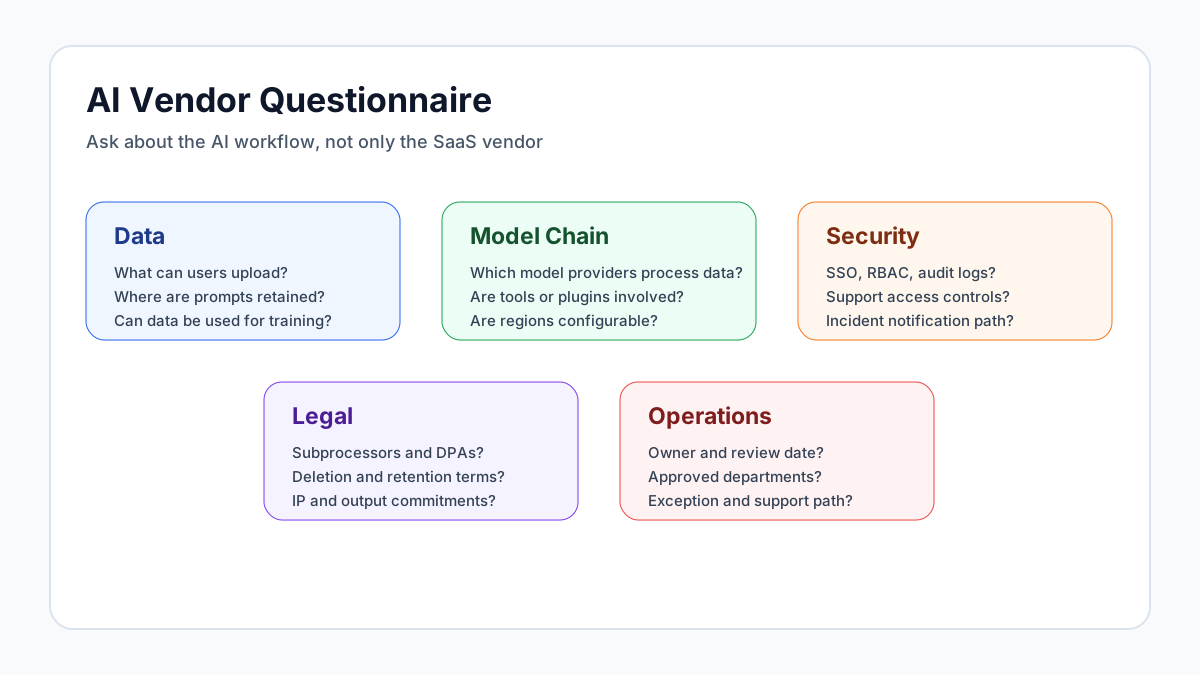
A vendor may have polished security documentation while the actual AI workflow still creates unacceptable exposure. The review should trace the data path from user input to model processing, logging, support access, analytics, backups, and deletion. Ask what data the user can upload, whether files are parsed by the vendor or by a subprocessed model provider, whether prompts and responses are retained, whether human reviewers can inspect them, whether the data can be used for training, and how deletion works when a customer terminates service.
The review should also cover output handling. AI outputs can contain customer information, proprietary analysis, generated code, summaries of confidential meetings, or recommendations used in downstream decisions. If a tool exports AI output into email, CRM, ticketing, or document repositories, the governance team should know where that content lands and how it is labeled. Vendor risk is not just about preventing leakage to the vendor. It is also about ensuring that employees do not unintentionally publish AI-generated claims, mix regulated data into unsupported workflows, or lose track of provenance after the AI output leaves the original tool.
Make Approval a Workflow, Not a Meeting
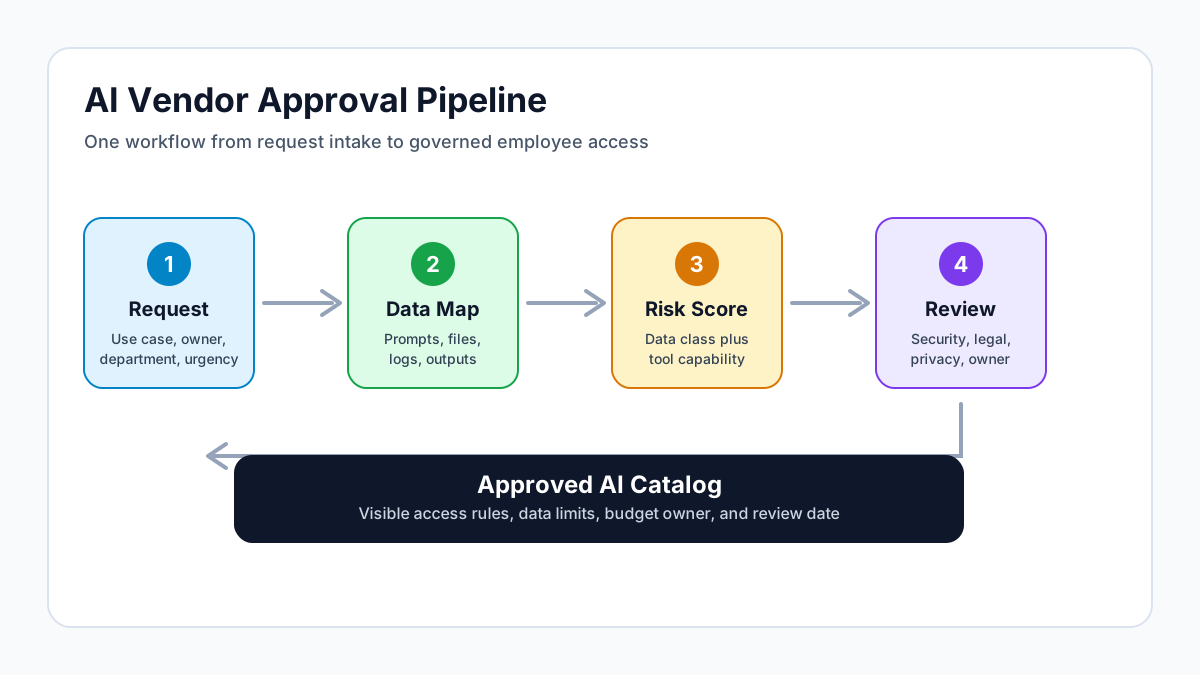
Many AI approval processes fail because they rely on scattered meetings and unclear ownership. A business team asks for a tool, procurement forwards a contract, security sends a questionnaire, legal asks for data protection terms, and the request sits in limbo. Employees interpret the delay as a soft refusal and start using personal accounts. The better pattern is a structured workflow with clear entry criteria, defined reviewers, standard evidence, and predictable outcomes.
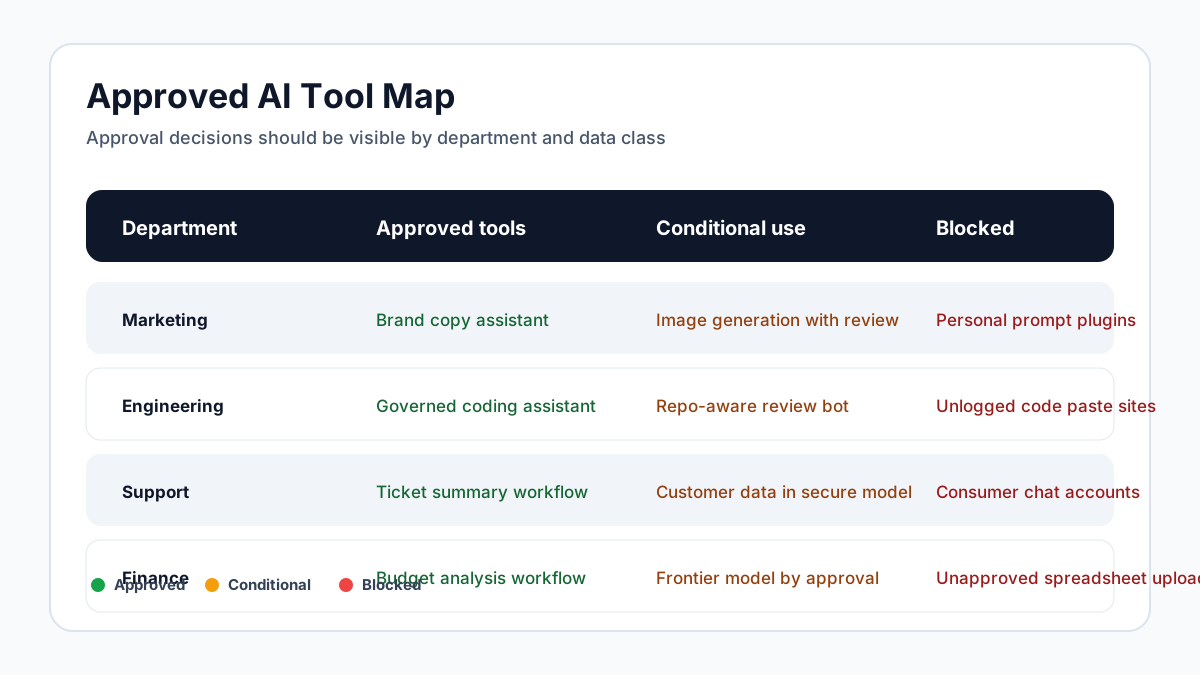
The request form should capture the business use case, expected users, data classes, tool capabilities, regions, vendors, contract status, and urgency. The system should route low-risk requests to lightweight review and high-risk requests to security, privacy, legal, and business leadership. The output should be one of a few clear decisions: approved for all users, approved for named groups, approved for sanitized data only, approved with monitoring, deferred pending vendor changes, or blocked. The decision should publish directly into an approved AI catalog so employees know what they can use. Without that visible destination, approval knowledge remains trapped in inboxes and spreadsheets.
Monitor Vendors After Approval
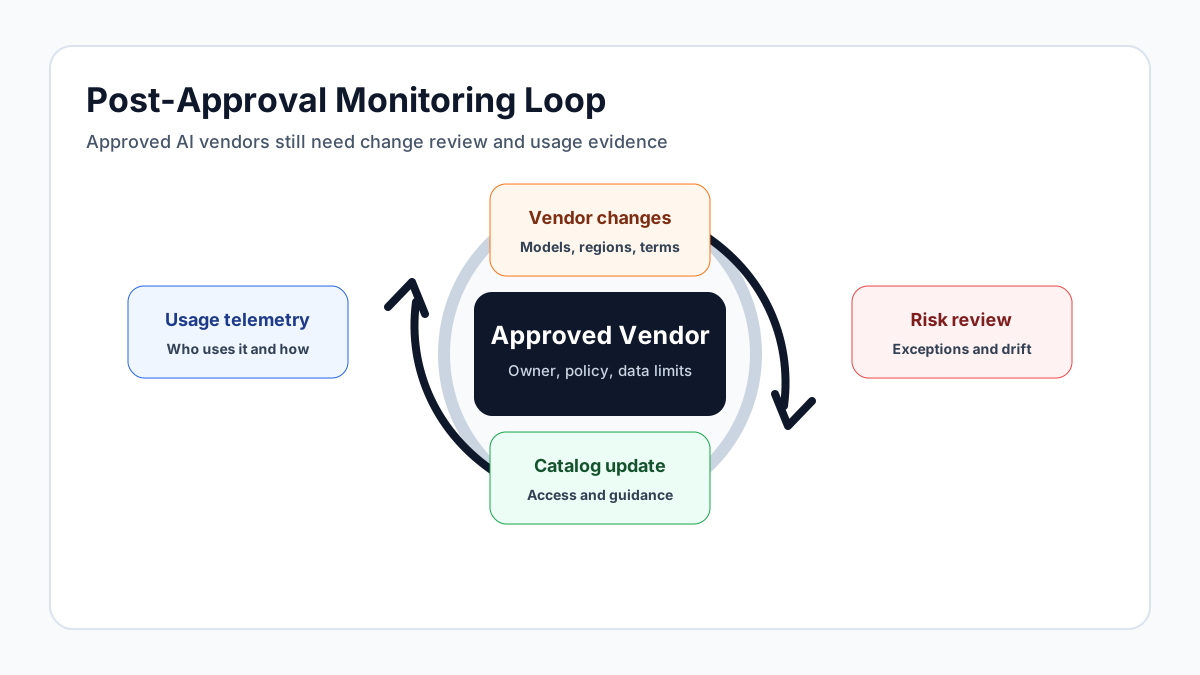
Approval is not the end state. AI vendors change quickly. A product may add a new model provider, launch agentic features, expand retention, introduce plugin access, change subprocessors, or add multimodal upload support. The governance program needs a review cadence that matches that pace. Standard vendors can be reviewed annually. Elevated and restricted vendors should be reviewed more often, and any material change should trigger an event-based review.
Monitoring should combine vendor attestations with internal telemetry. Vendor documentation tells the organization what the tool claims to do. Internal usage analytics shows how employees actually use it. If a tool was approved for drafting public blog copy but users are uploading customer exports, the risk profile has changed even if the vendor contract has not. If one department repeatedly requests exceptions, the control design may be too restrictive or the business need may require a safer sanctioned alternative. This is where AI vendor risk connects directly to usage analytics, policy guardrails, and audit trails. The vendor record should stay alive as operational evidence, not sit as a static procurement artifact.
Measure the Vendor Program
A vendor program should have its own metrics, otherwise leaders cannot tell whether the process is reducing risk or merely slowing requests. Useful measures include time from intake to decision, percentage of requests approved with conditions, number of tools moved from shadow use to sanctioned use, unresolved vendor evidence gaps, high-risk tools past review date, and policy events tied to each approved vendor. These metrics help governance leaders improve the program instead of relying on anecdotes from procurement or frustrated business teams.
The program should also track business enablement. A strict review process that blocks every request may reduce visible risk while increasing hidden risk. A permissive process that approves every tool may improve employee satisfaction while creating uncontrolled exposure. The useful middle ground is a process that approves more legitimate AI work through safer routes. If the marketing team keeps requesting external image tools, the answer may be a governed image workflow. If support keeps asking for ticket summarization vendors, the answer may be a centrally approved customer-data workflow. Vendor risk metrics should therefore show both control health and business demand. The best question is not "how many tools did we reject?" It is "how much useful AI work did we move into approved, observable, enforceable channels?" Those channels become the basis for future negotiations, budget planning, and employee training.
Where Remova Fits
Remova helps turn AI vendor approval from a document exercise into an enforceable operating model. The approved catalog can map tools, model providers, workflows, departments, and data classes to the policies that govern real usage. Role-based access can limit elevated tools to trained groups. Sensitive data protection can redact or block unsupported data classes before they leave the organization. Department budgets can prevent experimental usage from becoming uncontrolled spend. Audit trails can show who used which approved tool, what policy triggered, and what action was allowed or blocked.
This does not replace legal or procurement review. It makes those reviews operational. A contract says a vendor should be used only for approved data and approved users. A governance layer helps prove whether that rule was followed. For enterprises trying to reduce shadow AI, the message to employees should be simple: there is a clear path to request useful AI tools, approved tools are easy to find, and sensitive workflows have safer routes than personal accounts.