.png)
The Measurement Trap
Executives want to know whether AI is improving productivity. Security teams want to know whether AI usage is safe. Finance wants to know where spend is going. Compliance wants to know whether controls are working. Those are reasonable questions, but many organizations answer them in the wrong way: by logging every prompt and response in full, giving administrators broad search access, and calling the resulting database an analytics program.
That approach creates a new risk. Employee prompts may contain customer information, legal questions, health details, HR issues, source code, internal complaints, strategy drafts, or confidential negotiation notes. If the analytics system stores all of that content without strong controls, the organization has created a sensitive archive that may be more dangerous than the original AI usage. It can also undermine trust. Employees who believe every brainstorming prompt will be read by management will either avoid the sanctioned tool or move sensitive work to personal accounts. AI measurement should produce operational insight, not a culture of surveillance.
Separate Productivity Signals from Prompt Content
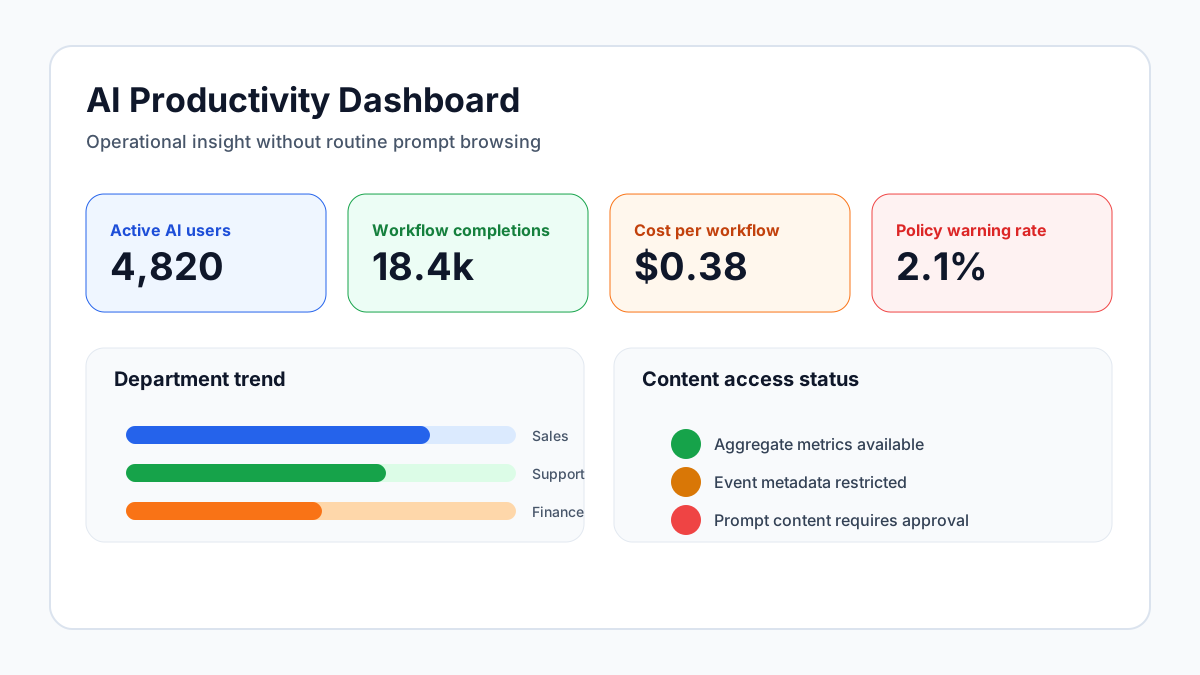
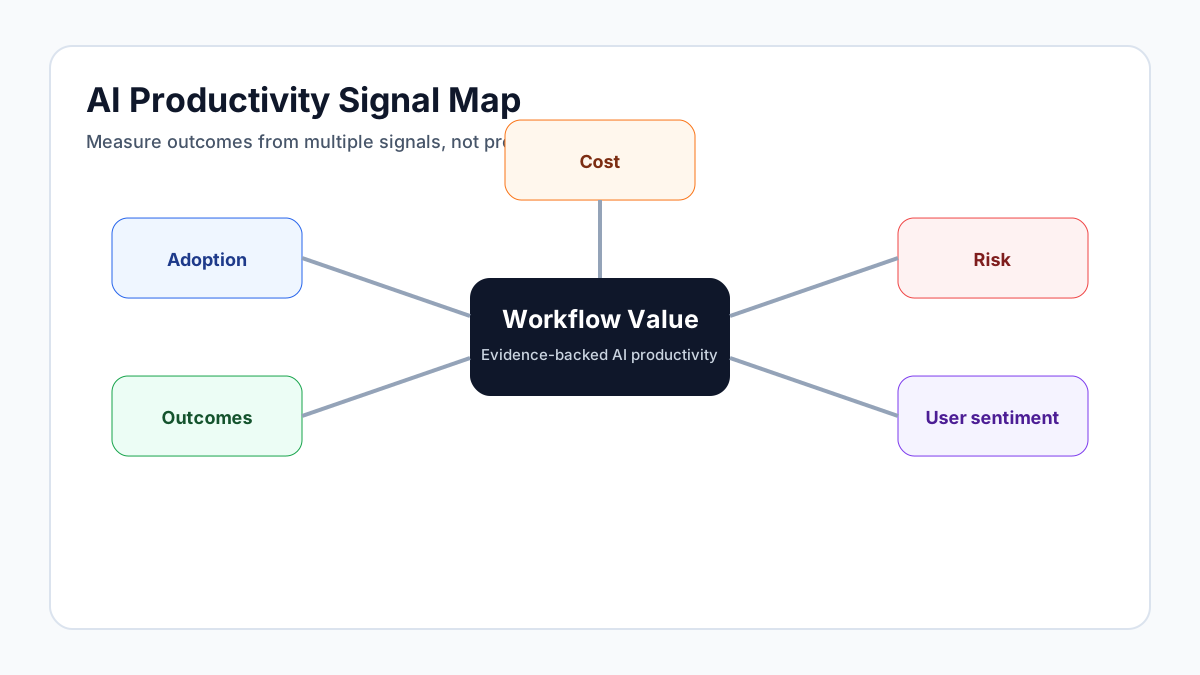
Most productivity questions do not require routine content access. Leaders can learn a great deal from metadata and aggregate signals: active users by department, workflow completion volume, model selection patterns, cost per workflow, policy warning rates, redaction rates, time saved estimates, user satisfaction, repeat usage, and exception requests. These metrics reveal whether AI is being adopted, where it is useful, where it is expensive, and where controls are causing friction.
Prompt content should be reserved for narrower purposes: incident investigation, quality review of approved workflows, abuse handling, legal hold, or explicitly consented evaluation. Even then, access should be role-limited, logged, and justified. A product leader may need aggregate adoption and outcome metrics. A security analyst may need policy event summaries. A legal reviewer may need specific prompt content only during an approved investigation. By separating the signal from the content, organizations can measure AI performance while reducing the volume of sensitive material exposed to administrators and dashboards.
Use a Tiered Observability Model
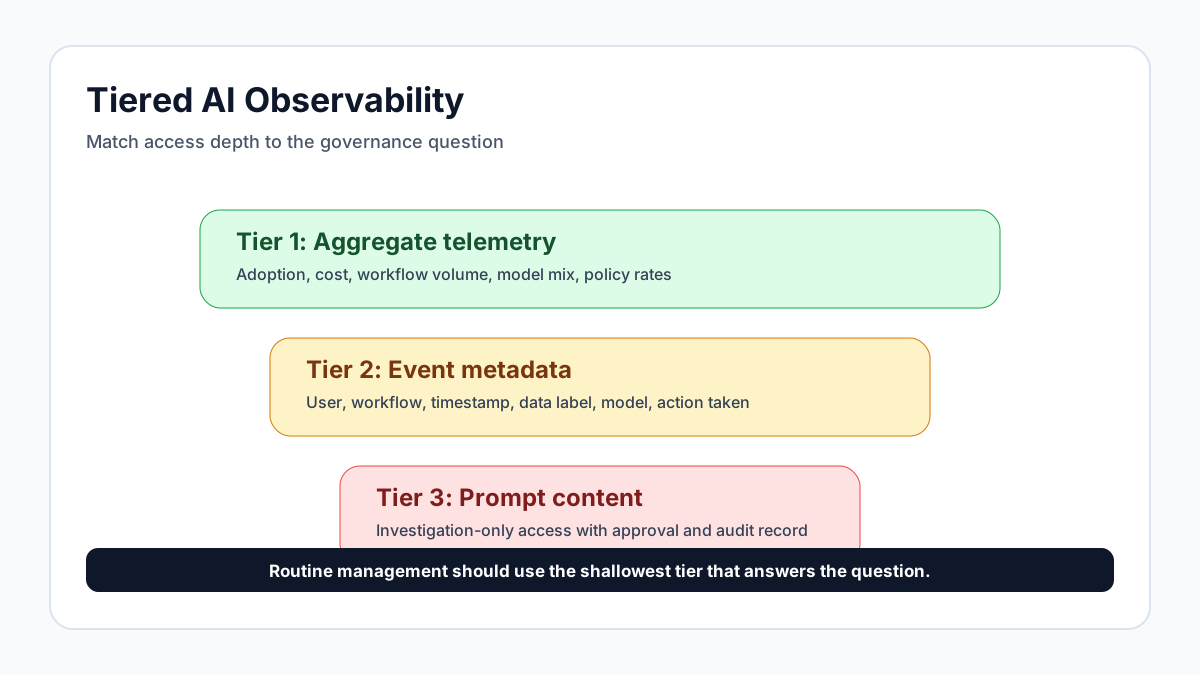
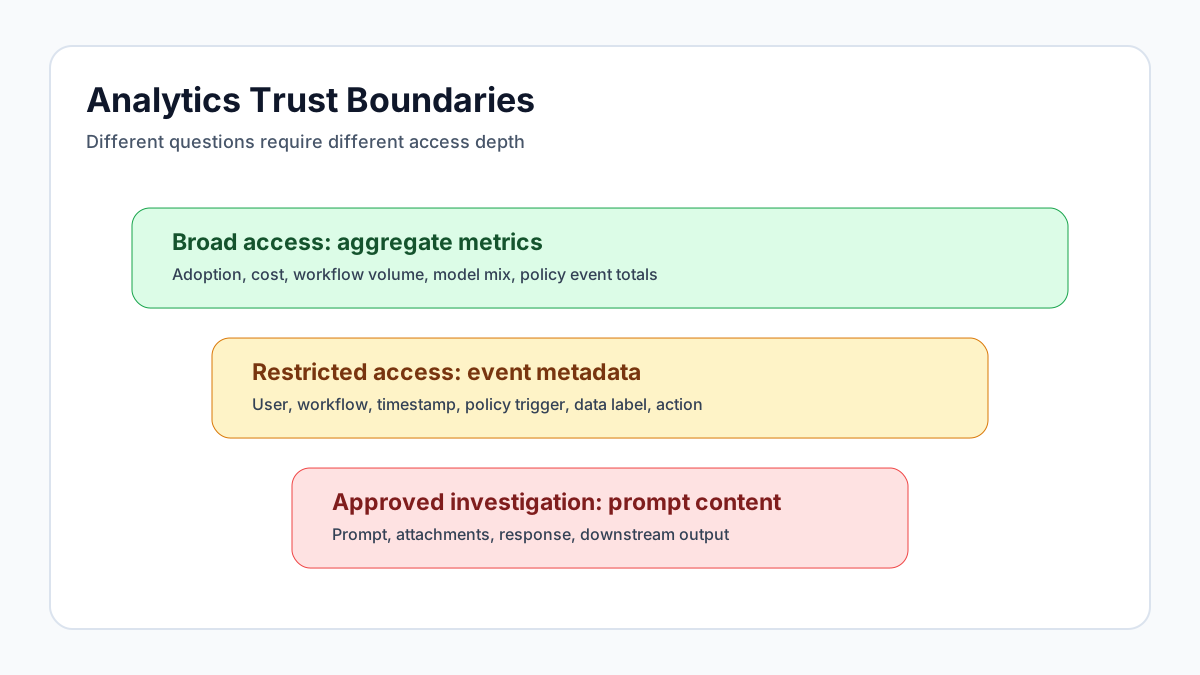
A practical model has tiers. The first tier is aggregate telemetry: counts, costs, model usage, department trends, workflow volume, and policy event totals. This tier should be broadly available to governance and operational leaders because it contains low-risk summaries. The second tier is event metadata: user identity, workflow, model, timestamp, policy trigger, data class label, and action taken. This tier is useful for security and compliance reviews, but access should be limited. The third tier is content: prompt text, uploaded files, generated response, and downstream output. This tier should require a clear reason and stronger approvals.
Tiering helps teams avoid false choices. They do not have to choose between flying blind and reading everything. They can use aggregate telemetry for routine management, event metadata for control monitoring, and content access for defined investigations. The model should be documented in policy so employees know what is collected, why it is collected, who can access it, and how long it is retained. Transparency is part of the control design.
Measure Workflow Outcomes, Not Just Usage
Counting prompts is easy, but it does not prove productivity. A department sending thousands of prompts may be experimenting inefficiently, fighting the interface, or regenerating low-quality answers. A team sending fewer prompts through a well-designed preset workflow may create more business value with less risk and lower cost. Measurement should focus on outcomes: contract review turnaround time, support summary acceptance rate, report preparation time, coding assistant pull request quality, sales follow-up completion, finance analysis cycle time, and reduction in manual rework.
Outcome metrics should be tied to specific workflows. Open chat is harder to measure because each user invents their own process. Standardized workflows create consistent inputs, outputs, and success criteria. They also make privacy-preserving measurement easier. A workflow can record that a contract summary was generated, accepted, edited, or escalated without exposing every clause to a broad analytics audience. This is how AI productivity measurement becomes operational rather than performative. It connects usage to business process improvement.
Protect Employee Trust with Clear Boundaries
Employee trust is an operational requirement, not a soft concern. If people believe the AI platform is a monitoring tool, they will underuse it, sanitize prompts excessively, or move work outside the sanctioned environment. Governance teams should publish clear boundaries: what is logged, what is aggregated, when content may be reviewed, who can approve content access, how long logs are retained, and which use cases are prohibited. The message should be plain: the system is designed to keep company and customer data safe, manage cost, and improve workflows, not to score individual employees based on private drafts.
There are still legitimate cases for content review. Security incidents, legal holds, abuse investigations, regulated workflows, and approved quality testing may require inspection. The important point is that content access should be exceptional, controlled, and auditable. Employees should not need to guess whether a manager can casually browse their prompts. Clear rules reduce both privacy risk and adoption friction.
Build a Governance Review Cadence
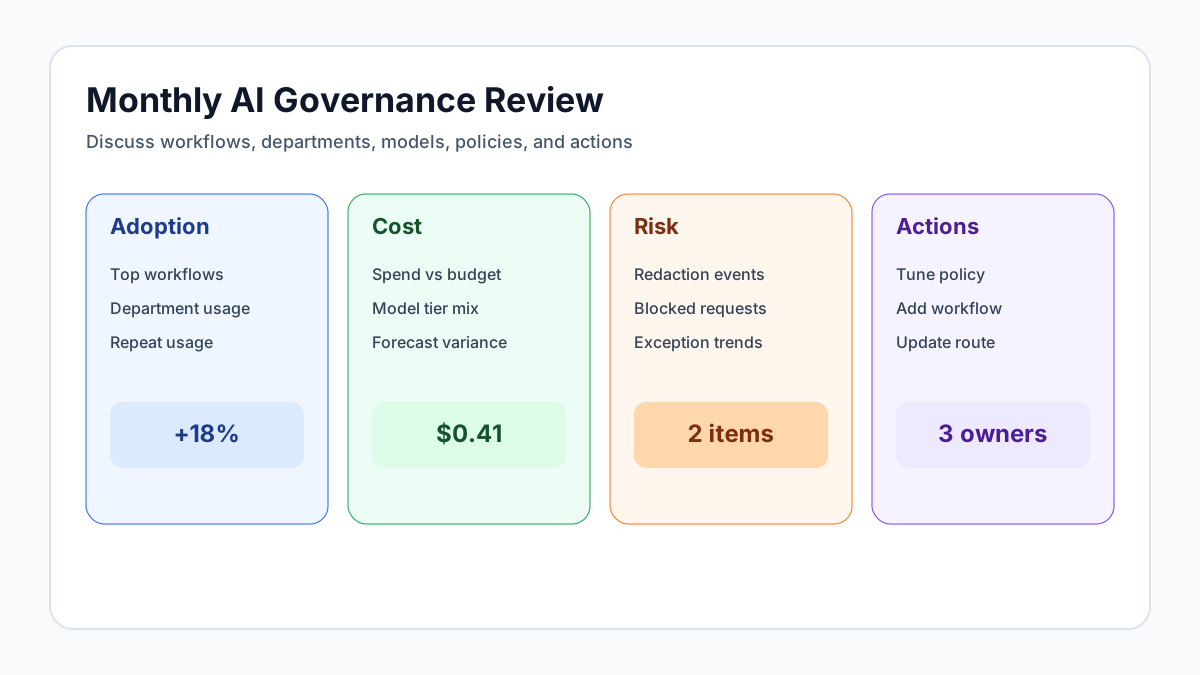
Analytics become useful when they drive decisions. A monthly AI governance review should look at adoption by team, budget variance, top workflows, model tier usage, blocked requests, redaction events, exception requests, incident patterns, and workflow quality. The discussion should focus on changes: which workflows should be expanded, which policies need tuning, which departments need training, which model routes are too expensive, and which risky use cases need safer alternatives.
The review should avoid ranking individual employees unless there is a specific investigation. At the governance level, the unit of analysis should usually be workflow, department, model, policy, and data class. This keeps the conversation focused on system design. If marketing has repeated image-generation policy warnings, the answer may be a sanctioned brand-safe image workflow. If engineering has high frontier model spend for routine code explanation, the answer may be model routing. If support has many blocked customer-data uploads, the answer may be a secure ticket summarization workflow. Measurement should turn signals into better controls.
Be Honest About Measurement Limits
AI productivity metrics are useful, but they are not magic. Many benefits are indirect. A better first draft may reduce cognitive load, improve consistency, or help a junior employee complete work with less supervision. Those gains may not appear cleanly in a dashboard. Some metrics can also mislead. Prompt volume can rise because adoption is healthy, because the interface is inefficient, or because users are repeatedly regenerating poor answers. Lower spend can mean efficient routing, or it can mean employees stopped using the sanctioned tool and moved work elsewhere.
A mature program pairs quantitative metrics with lightweight qualitative review. Ask workflow owners whether outputs are accepted, edited, escalated, or discarded. Survey users about where AI saves time and where it creates rework. Review a small approved sample of workflow outputs where privacy and policy allow. Compare pre-AI and post-AI cycle times for a narrow process rather than declaring company-wide productivity gains. The goal is credible evidence. Overstating ROI damages trust with finance and operations leaders. Under-measuring leaves good workflows underfunded. A careful measurement program admits uncertainty while still giving leadership enough signal to improve the system.
Teams should also document measurement assumptions. If a workflow claims to save fifteen minutes per document, record who estimated that number, how many documents are processed, how often outputs are accepted, and how much manual review remains. If a dashboard reports cost per workflow, define whether it includes only model tokens or also application licenses, review time, and engineering support. Clear assumptions make AI productivity reporting defensible. They also make it easier to revise the model when usage patterns change.
This discipline matters because AI programs compete for budget. Finance leaders will eventually ask whether measured benefits justify licenses, governance tooling, engineering support, and model spend. A privacy-aware measurement program should be strong enough to support that conversation without falling back to invasive monitoring. The more precise the workflow metric, the less pressure there is to inspect individual behavior.
Good measurement also protects successful teams. When productivity gains are described only in stories, the next budget review can treat AI as a novelty. When the team can show specific cycle-time gains, reduced rework, lower model cost, and stable policy outcomes, AI becomes an operating capability that can be funded rationally. This is especially important when the organization is deciding which workflows deserve deeper automation, better integrations, or dedicated process owners next quarter, with confidence.
Where Remova Fits
Remova supports privacy-aware AI measurement by separating usage analytics, policy metadata, budget controls, and audit trails. Leaders can see adoption, cost, model selection, and workflow trends through usage analytics. Security teams can monitor policy events and repeated risk patterns through policy guardrails. Finance teams can use department budgets to connect spend to ownership. Sensitive prompt content can be handled through controlled audit workflows rather than exposed broadly.
The goal is not to hide risk. The goal is to observe the right layer for the question being asked. For routine productivity management, aggregate and workflow-level metrics are usually enough. For security review, event metadata often answers the question. For serious incidents, controlled content access may be necessary. Remova helps keep those layers distinct so AI governance remains useful without becoming invasive.