.png)
Data Residency Is a Workflow Question
Data residency used to be discussed mostly in the context of databases, storage buckets, and SaaS regions. AI makes the question more complex. A single employee request can include prompt text, files, images, embeddings, retrieval queries, vector search results, model responses, safety classifications, evaluation traces, cost records, and audit logs. Some of those artifacts may be processed by the primary vendor. Others may be handled by a model provider, cloud region, monitoring service, support system, or analytics pipeline.
This means the residency question is not simply "where is the model hosted?" A model can run in one region while logs, backups, or human review workflows live somewhere else. A company may keep source documents in a regional repository but send document chunks to a global model endpoint. A vendor may advertise enterprise privacy while still allowing support access from multiple jurisdictions. A useful data residency review follows the workflow from input to output and asks where each artifact is processed, stored, retained, accessed, and deleted. That workflow view is the foundation for sovereign AI governance.
Map Every AI Data Artifact
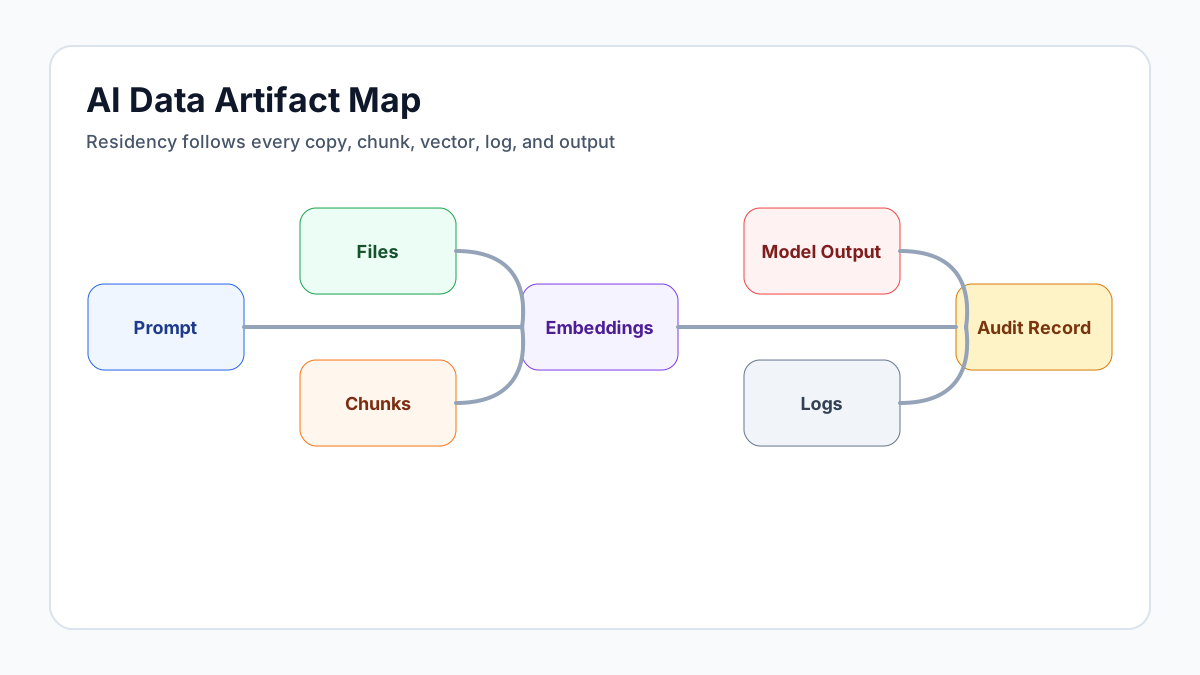
The data map should include every artifact created by the AI workflow, not just the original input. Prompts are obvious, but uploaded files may be parsed into extracted text, thumbnails, embeddings, or temporary chunks. Retrieval systems may copy relevant records into context windows. Safety systems may create classification labels or policy event logs. Model responses may include summaries of confidential data. Application layers may store chat history, user feedback, and cost records. Each artifact may have a different sensitivity and retention requirement.
The map should also identify data that looks harmless until combined. A prompt ID, user ID, model ID, cost center, and policy trigger may not reveal content directly, but together they can expose sensitive operational patterns. For example, a spike in legal department usage around a specific date may reveal deal activity. Residency governance should therefore separate content, metadata, analytics, and audit evidence. Some artifacts need strict regional storage. Some can be aggregated. Some should be minimized or deleted quickly. The right answer depends on the business context, contracts, and applicable legal obligations.
Route by Region, Data Class, and Model Capability
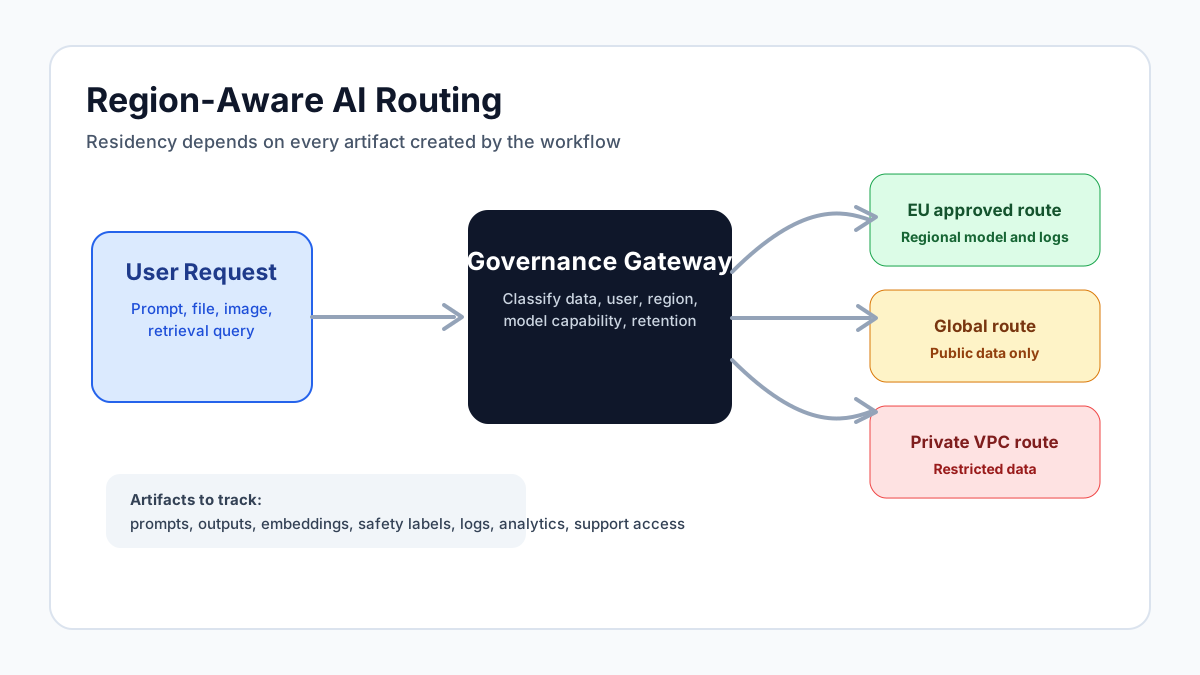
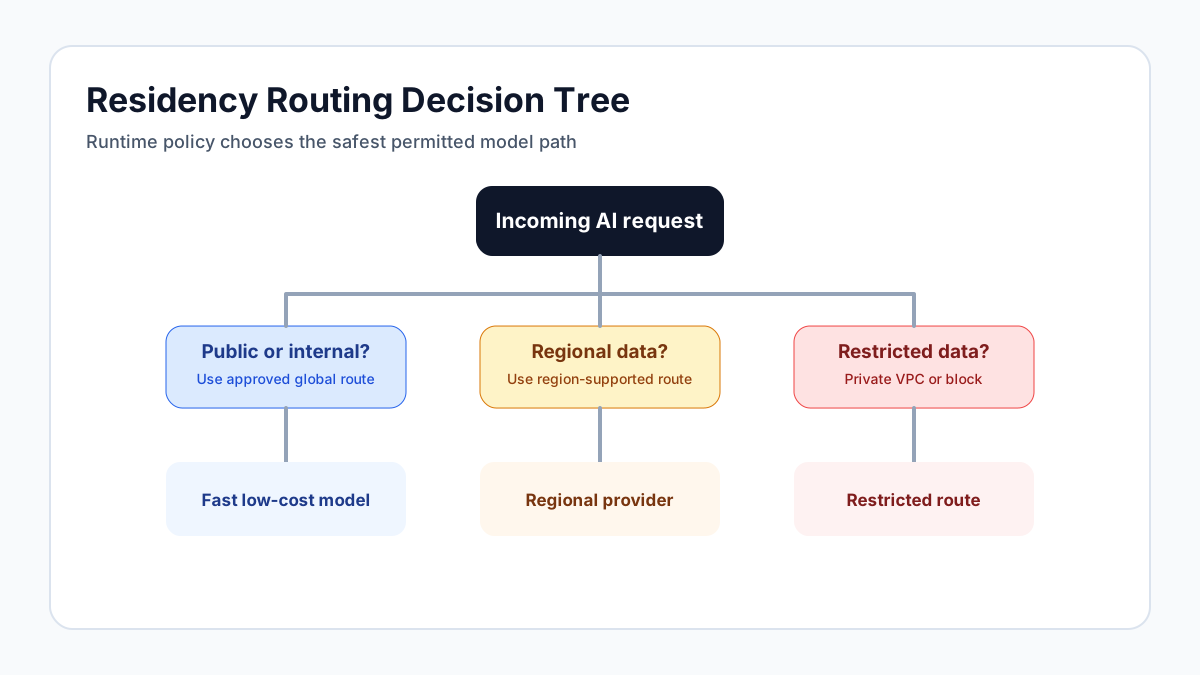
The operational control is routing. Enterprises need a way to decide which model or provider can process a given request based on user location, department, data class, workflow, and required capability. Public marketing content may be allowed to route to a global frontier model. EU employee data may need an EU-supported workflow. Customer-controlled confidential data may require a private deployment, a provider with specific regional commitments, or a local model. Highly sensitive secrets may be blocked entirely unless the workflow is explicitly approved.
Routing cannot be static because user behavior is not static. A user may start with a harmless drafting request and then upload a confidential spreadsheet. The governance layer should evaluate the actual request at runtime, not only the application name. If the prompt contains personal data, credentials, source code, medical content, or financial details, the platform should apply the relevant residency and data handling policy before the request reaches the model. This combines sensitive data protection with model governance: identify the data, select the permitted route, and record the decision.
Sovereign AI Is More Than Local Hosting
Sovereign AI is often reduced to a simple promise: run models locally or inside a national cloud. Local hosting can be valuable, especially for regulated or public-sector workflows, but it is not the whole governance problem. A locally hosted model can still be unsafe if access controls are weak, prompts are over-retained, outputs are unreviewed, or agents can call unauthorized tools. A cloud-hosted model can be acceptable for some workflows if contracts, regions, retention, encryption, and audit controls match the risk.
The real question is control. Who can access the system? Which data can enter? Which models are approved? Where are prompts and outputs stored? How are logs protected? Can administrators prove which route was used? Can the organization change providers without losing governance evidence? Sovereign AI should be treated as an operating model for jurisdictional control, not as a single infrastructure decision. The strongest programs combine region-aware routing, role-based access, data minimization, vendor review, encryption, retention controls, and audit evidence.
Review Contracts Against the Actual Flow
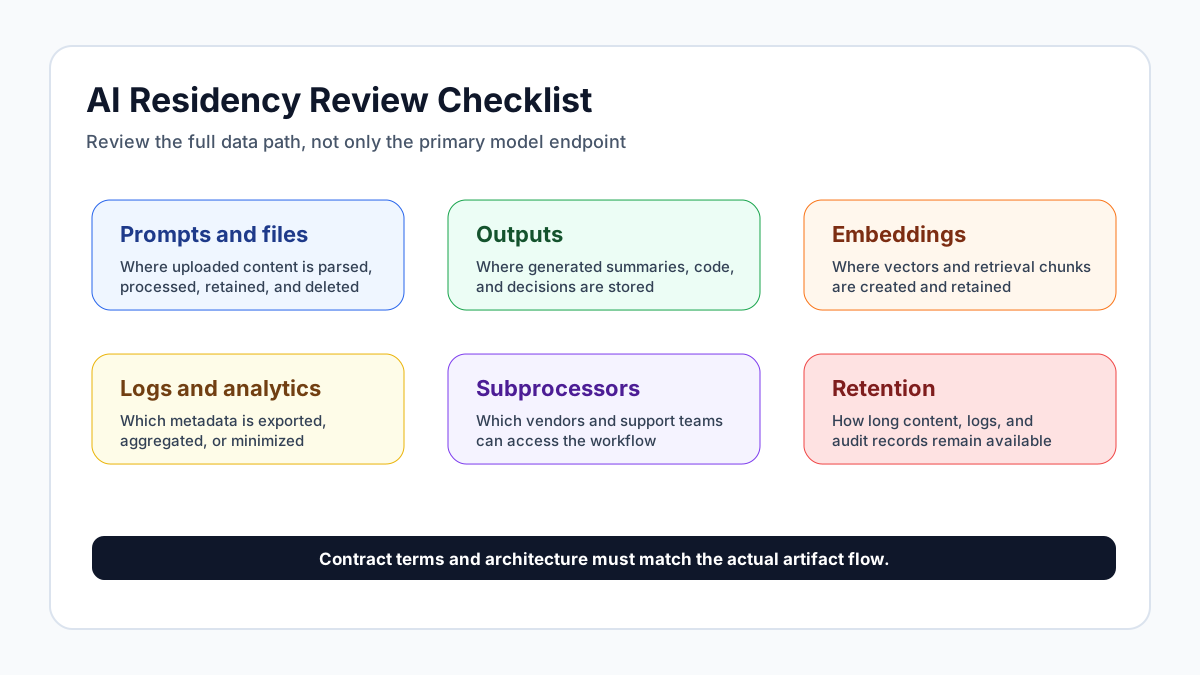
Contracts and data processing terms should be reviewed against the mapped AI flow. Generic privacy language may not answer operational questions. Legal and procurement teams should ask whether prompts, files, embeddings, outputs, and logs are used for training; how long each artifact is retained; which subprocessors are involved; which regions process and store data; whether support personnel can access content; whether deletion is complete and timely; and whether enterprise settings override default consumer behavior.
The contract should also match the internal policy. If the company tells employees that customer data can only be processed in a specific region, the vendor terms, model routing, and application logs need to support that claim. If the vendor supports regional storage but the internal app stores prompt history in a global database, the program still has a gap. If a workflow uses multiple providers, each provider needs to be assessed. This is why technical architecture and legal review cannot be separated. The contract defines the promise. The architecture determines whether the promise is actually true.
Build Audit Evidence for Residency Decisions
Residency governance eventually has to answer evidence questions. Which requests containing regulated data were routed to approved regions? Which were blocked? Which users accessed region-restricted workflows? Which vendors processed which data classes? Which policy exceptions were approved, by whom, and for how long? Which logs were retained and when were they deleted? Without operational evidence, residency claims depend on policy documents and vendor marketing materials.
Audit evidence should be structured. It should include user identity, department, location or policy group, data classification result, model route, vendor, region, policy decision, retention setting, and exception approval when relevant. The content itself may need stronger access controls than the metadata. Teams should avoid creating an unrestricted surveillance archive in the name of compliance. Good residency evidence proves control behavior without unnecessarily exposing sensitive prompts. That balance is especially important when multiple jurisdictions, employee privacy expectations, and customer contractual commitments overlap.
Plan for Exceptions and Business Continuity
Residency rules need an exception process because real business operations rarely fit perfectly into a policy map. A customer may request urgent support from a region that does not have the preferred model available. A legal team may need to review multilingual evidence using a stronger model outside the usual route. An incident response team may need a temporary workflow to analyze malicious content. A rigid system that has no exception path encourages workarounds. A permissive system that allows ad hoc exceptions creates invisible risk.
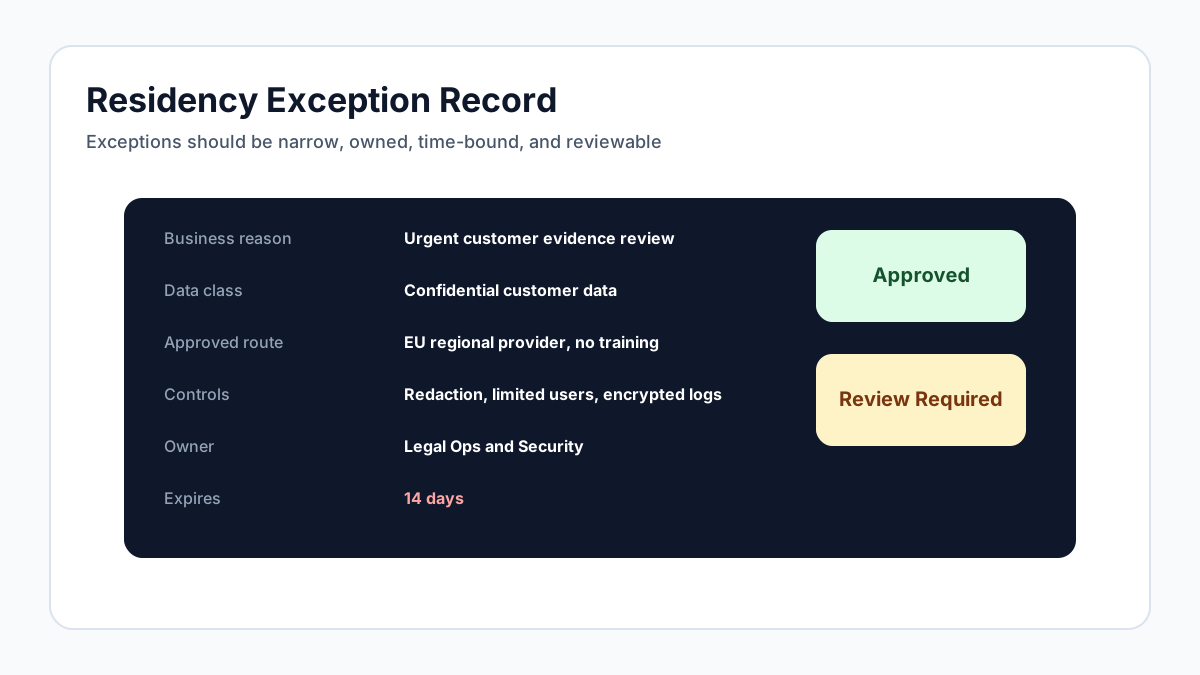
The exception process should be narrow, time-bound, owned, and reviewable. It should document the business reason, data class, model route, region, retention setting, approving roles, compensating controls, and expiration date. It should also define what happens if the preferred region is unavailable. Business continuity matters because AI workflows may become embedded in support, engineering, compliance, and finance operations. If a regional provider has an outage, the organization should know whether requests fail closed, reroute to a lower-risk local model, move to a manual process, or require explicit approval for a temporary route. These decisions belong in governance design before users depend on the workflow in production.
Exception evidence should be reviewed after the temporary period ends. Did the workflow stay inside the approved route? Did users expand the exception beyond its intended purpose? Did the business need justify a permanent regional deployment, or should the exception expire? A residency program becomes more credible when exceptions are visible, rare, justified, and closed. Hidden exceptions are where policy promises quietly break.
Residency governance should also account for mergers, new customer contracts, and expansion into new markets. A workflow that was acceptable for one region may need different routing once the company serves public-sector customers, regulated industries, or employees in additional jurisdictions. The residency map should be reviewed whenever the business footprint changes. Waiting until contract signature or audit fieldwork is too late, because architecture changes, vendor negotiations, and model migration can take months.
The review should include customer commitments as well as laws. Many residency obligations come from contracts, procurement questionnaires, sector rules, or internal policy rather than a single statute. The governance record should show which commitment each route supports, in plain language.
Where Remova Fits
Remova helps enterprises enforce region-aware AI governance at the workflow layer. Policies can evaluate user role, department, data class, model selection, and approved vendor routes before a request is sent. Sensitive data can be redacted, blocked, or routed to a safer model. Audit trails can preserve evidence of routing and policy decisions. Retention controls can reduce how much prompt and response content remains available after the business need has passed.
The practical benefit is consistency. Without a central governance layer, each AI app implements residency differently, if it implements it at all. One team may rely on vendor settings, another on manual policy, another on network controls, and another on trust. Remova gives governance, security, and compliance teams a single place to define the rule, enforce the route, and review the evidence.